iDentity Orthodontics Blog
The Growth & Development Program Explained
LINCOLN PARK AND MUNDELEIN, ILLINOIS — Dr. Michael Stosich, an orthodontist who treats adults and children, helps patients achieve their ideal smiles through affordable braces treatment.
Sometimes that is best accomplished through what is known at iDentity Orthodontics as the Growth and Development Program. Through this program, Dr. Stosich wants to see children for an evaluation by their 7th birthday – earlier if your child has unhealthy oral habits you can’t break, or you see something unusual in your child’s bite.
These growth and development checks tend to be quick – sometimes lasting 15 minutes or less. Parents may question the purpose of these checks with their child’s orthodontist because frankly, planning for the appointment and taking time away from work and school often takes longer than the appointment itself. But we make sure our patients’ parents understand the value and importance of them. When we recommend a child be placed in our Growth and Development Program, it is because we need to make sure the teeth are developing and coming in properly, and the craniofacial complex is developing as it should.
“Sometimes treatment is required for certain problems; sometimes it’s not,” says Dr. Stosich, who provides Mundelein orthodontics for adults and children. “That’s the point of the program. It’s a free program we offer that is used to determine the appropriate time for treatment and includes a free X-ray every six months as needed.”
In addition to monitoring our young patients’ growth, these appointments are a great way to set the stage for pleasant experiences with physicians. We try to make these appointments fun by having contests, games and a prize wheel.
“Kids get to come in and have a fun experience, which makes them that much more comfortable about coming to a doctor’s office,” says Dr. Stosich, family orthodontist. “They need to understand that every visit with a doctor doesn’t mean you’re sick or you’re getting a shot.”
Dr. Stosich promotes the American Association of Orthodontists’ recommendation of having children evaluated by age 7. Often, no treatment is needed, and in that case, it’s good to at least have that peace of mind, he says.
Monitoring typically continues until the child has her full complement of adult teeth, which is generally around 11 or12 years old. However, it’s important to remember that every child grows differently, so the length of time spent in the Growth and Development Program depends on the individual.
Bite and alignment issues that could require interceptive treatment include crossbites, severe crowding, underbites and situations where the jaws aren’t growing properly.
Crossbite is the term used to describe a tooth or several teeth that are closer to the cheek or the tongue than the antagonist tooth/teeth above or below them. An underbite occurs when the lower jaw juts forward beyond the teeth in the upper jaw.
Being evaluated at age 7 and addressing problems such as crossbite and underbite early can save money and frequently eliminate the need for more invasive treatment later in the child’s life.
“Particularly in the case of an underbite, interceptive treatment can correct problems by using the fact that the child is still growing to our advantage,” says Dr. Stosich, who also is an Lincoln Park invisalign provider. “We can move teeth and hinder jaw growth with a variety of appliances while growth continues, whereas waiting until a child is older and his jaw growth is complete often means our only method of correction is surgery.”
We here at iDentity Orthodontics want to provide the most effective, least invasive treatment possible that brings about the most ideal results for our patients. Our Growth and Development Program helps make that possible.
Tags: 7th birthday, adult orthodontist, American Association of Orthodontists, children orthodontist, Crossbite, fun appointments with doctor, unhealthy oral habits
Missing Some Teeth? Grow New Ones!
GRAYSLAKE AND GURNEE, ILLINOIS — This likely will sound like we’re confusing fact with scenes from a science fiction movie, but rest assured it’s true: researchers are using stem cells to grow new teeth.
This research is particularly near and dear to Dr. Michael Stosich’s heart, because he has an extensive educational background in stem cell research at the University of Pennsylvania, Columbia University and University of Illinois. He also has had dozens of papers published on the topic, and he has given presentations on the topic of stem cells in medicine. He has won a number of awards related to his stem cell research, too.
The website DVice reported on March 16 that researchers have successfully combined adult human gum cells with cells taken from the molars of fetal mice to grow teeth that contain dentin – the structural material of teeth – with viable roots and hard protective enamel.
“Although practical applications of this may be several years away, it’s promising research that could have orthodontic applications,” says Dr. Stosich, who provides braces and other options like orthodontic treatment for adults and children at our Grayslake, Hyde Park and Lincoln Park offices. “In the future, these tissue engineered teeth will be made from patients’ own stem cells. This is currently underway.”
We get patients occasionally who have congenitally missing teeth, or they have lost a tooth due to trauma or decay. Presently, an orthodontist typically recommends dental implants for correcting this problem once the patient is about age 21. If they are younger, we fill the space with an appliance called a Maryland bridge. The appliance gets its name from the University of Maryland where it was developed. It is a type of dental bridge that enables a false tooth to be positioned in the space left by a missing tooth.
“It’s exciting to know there will come a day when we employ tissue engineering to place real teeth in areas where a patient’s teeth are missing,” says a Lincoln Park orthodontist Dr. Stosich, who treats patients even from Gurnee, Libertyville and other neighboring areas. “Within our lifetime, we should see this research translated from bench to bedside.”
Stem Cell Research – A Background
Scientists have researched tissue engineering for several years.
“Tissue engineering is an interdisciplinary field that applies the principles of engineering and the life sciences toward the development of biological substitutes that restore, maintain or improve tissue function,” says Dr. Stosich, a Chicago Invisalign Teen provider.
Drs. Charles and Joseph Vacanti of Massachusetts General Hospital created the Tissue Engineering Society in 1994 and incorporated it two years later. Today the society has thousands of members who work to advance the field. The foundation of what the society focuses on regarding modern day bioengineering was laid in the 20th century. In the 1970s, scientists began genetically engineering some of the growth hormones used in current bioengineering.
The Future
Now companies have formed – such as Odontis, created in 2004 by King’s College London scientists – that work on developing human teeth from stem cells. Their work involves taking adult stem cells and treating them in a cell culture so they are programmed to develop into teeth. Scientists would transplant them into a person’s jaw where a gap exists, and then a replacement tooth would grow just as happens when people grow their original adult teeth.
These scientists believe it would take two to three months for the tooth to fully develop, according to an article posted at Upgrade Your Body. The cost should be comparable to existing treatment options, which could make it a viable alternative to implants.
We are anxious to continue following this subject, and we’ll keep you posted as developments occur.
© 2013 Sinai Marketing and Dr. Michael Stosich. Authorization to post is granted, with the stipulation that Sinai Marketing and Dr. Michael Stosich are credited as sole source. Linking to other sites from this article is strictly prohibited, with the exception of herein imbedded links.
Tags: orthodontist Lincoln Park
Dr. Stosich Speaks at SureSmile Doctor Symposium
GRAYSLAKE, LAKE VILLA AND GURNEE, ILLINOIS – Our very own Dr. Michael Stosich had the pleasure of speaking at the first SureSmile Doctor Symposium in Dallas Feb. 21-23.
This inaugural event held at the Ritz-Carlton hotel was the result of requests by experienced SureSmile doctors. It served as a networking and learning event emphasizing peer-to-peer learning through expert case presentations and moderated small group discussion. Approximately 120 orthodontists from throughout the United States, Canada, Japan and Australia attended.
Dr. Stosich spoke on the topic of efficient orthodontics – Treating Adult Patients in 12 Months or Less.
“This event provided an excellent opportunity for orthodontists from throughout the world to learn about advanced SureSmile techniques,” says Dr. Stosich, who treats adults and children at our practice.
Symposium organizers asked Dr. Stosich to participate in the event because he is an experienced SureSmile user. He is the only university-trained orthodontist in the United States to have received advanced, personalized training from the inventor of SureSmile.
“It’s an honor to share with others the knowledge I’ve gained in this field,” says the Gurnee expert of affordable braces. “SureSmile is an excellent system that addresses a wide range of malocclusions. It’s a powerful tool in the hands of a well-trained orthodontist.”
SureSmile makes it possible for an orthodontist to visually define the appropriate positioning of the teeth, according to the company’s website. SureSmile technology calculates the customizations necessary to bring to fruition the orthodontist’s plan. Then a robot is used to precisely bend the patient’s archwires. All of this combines to provide treatment results in record time. This technology actually cuts treatment time by about 40 percent, while also improving the quality of the results.
© 2013 Sinai Marketing and Dr. Michael Stosich. Authorization to post is granted, with the stipulation that Sinai Marketing and Dr. Michael Stosich are credited as sole source. Linking to other sites from this article is strictly prohibited, with the exception of herein imbedded links.
Tags: affordable braces Gurnee, orthodontics Lake Villa, SureSmile
Why Should I Get A Second Opinion Before I Get Braces?
GRAYSLAKE AND LINDENHURST, ILLINOIS — Getting braces for you or your child is a significant expense, so it stands to reason that you would want to ensure you’ve selected the best provider for the job.
iDentity Orthodontics routinely receives calls from people seeking a second opinion regarding orthodontic treatment for themselves or their children. It is common for people who are considering significant dental care to do so.
People typically come here in search of a second opinion when they have questions about the proposed treatment course suggested by another orthodontist. Mundelein and Grayslake orthodontist Dr. Michael Stosich says. “Patients often choose us after that second opinion because of our courteous staff and the technologically advanced training and treatment options provided by us.”
It’s important to remember that different orthodontic professionals may approach treatment differently and still get the same results. At the end of the day, you must find the provider with whom you have the most confidence and best rapport, says Dr. Stosich, a provider of adult orthodontics in Gurnee.
There are some red flags that could signal the need for seeking a second opinion. One occasion is if your orthodontist has said you need emergency treatment.
“Emergency treatment is very rare,” Michael Stosich says. “If you’re feeling pressured to begin treatment immediately, don’t feel obligated. Get another opinion.”
Another reason to seek another opinion is if your orthodontist has recommended jaw surgery or tooth extraction.
“That is a big decision,” says the affordable braces provider. “Maybe get another opinion so you feel better about that decision.”
A quick sidebar: you can help avoid an orthodontist’s extraction or surgery recommendation for your children by taking them to an orthodontic evaluation by age 7, which is recommended by the American Association of Orthodontists. Evaluations at this age can identify alignment and bite abnormalities early enough to correct them without the need for such extreme measures. At this age, Dr. Stosich can use a child’s growing jaws to his benefit by guiding the growth. He can expand palates to make room for erupting teeth and control jaw growth to allow one jaw to catch up with the other if an overbite or underbite is diagnosed.
Another signal to shop around is if you feel that you lack rapport with your orthodontist.
Orthodontic treatment requires a considerable investment of your time. You’ll be visiting your orthodontist every six to eight weeks for at least one to two years in most cases. If for any reason you simply feel that you don’t “click” with your orthodontist, perhaps you should get a second opinion to see if you find someone you like better.
“Particularly when we’re talking about treating children, compliance is a huge factor in whether treatment goes according to plan,” Dr. Stosich who also provides invisalign in Round Lake says. “A child who likes and respects the orthodontist is more likely to follow the rules and do the things that must be done to ensure treatment is completed on time.”
A Final Thought
Choosing an orthodontist is a decision that shouldn’t be made lightly. Don’t be afraid to ask questions, Dr. Stosich says. For instance, make sure your care is totally customized by one doctor to you, and not a one-size-fits-all approach. Ask to see before and after photos of other patients who’ve been treated for similar malocclusions.
Our goal is to always provide the most effective treatment recommendations and to create an environment that not only puts patients and parents at-ease, but also gets them excited about treatment. If you feel anything less than comfortable and confident in your orthodontist’s abilities, search until you find a professional with whom you can be happy.
© 2013 Sinai Marketing and Dr. Michael Stosich. Authorization to post is granted, with the stipulation that Sinai Marketing and Dr. Michael Stosich are credited as sole source. Linking to other sites from this article is strictly prohibited, with the exception of herein imbedded links.
Tags: affordable braces, orthodontics for adults and children
Dr. Stosich Offers Smiles for Service

GRAYSLAKE AND LIBERTYVILLE— When a patient came to our office recently with a serious need for orthodontic treatment but lacked insurance or an inability to pay, Dr. Michael Stosich came up with a plan.
Now the patient will get the smile he wants in exchange for providing 30 hours of community service he can be proud of.
Our patient, the handsome 8-year-old boy pictured with his mother and Dr. Stosich, is one of five children. He has a small upper jaw that doesn’t function very well, and he never smiles.
Soon, that will change. Dr. Stosich is going to provide Phase I orthopedic treatment. Also referred to as interceptive orthodontic treatment, this method uses a child’s growth to the orthodontist’s advantage and helps prevent the development of more serious dental problems later in life.
“We’re excited to give him a reason to smile,” says Dr. Stosich, a provider of braces for children, as well as adult orthodontics treatment for patients from Libertyville, Grayslake, Lake Villa and other neighboring communities. “And we’re also glad that in exchange for our generosity, this boy and his mother have committed to being generous with their time by volunteering in the community.”
The patient’s mother is grateful for the opportunity to improve her son’s smile.
“She cried and was very thankful of the arrangement,” says Dr. Stosich, a Lake Villa Invisalign and SureSmile braces provider. “The boy was extremely happy, too.”
Nini Lustig, executive director of Lake County Cares, is helping the family connect with some volunteer opportunities. She offered several recommendations of where the family could volunteer. This is the first time she’s received such a request in exchange for orthodontic treatment.
“I thought it was creative and meaningful,” Lustig says. “In my world, it’s the perfect solution. (Dr. Stosich) is doing something where people won’t feel like they’re getting a hand-out. There’s dignity in it. Everybody wins.”
© 2013 Sinai Marketing and iDentity Orthodontics. Authorization to post is granted, with the stipulation that iDentity Orthodontics and Sinai Marketing are credited as sole source. Linking to other sites from this document is strictly prohibited, with the exception of herein imbedded links.
Tags: adult orthodontics, Lake Villa Invisalign, SureSmile
Aesthetic Options Keep Orthodontic Treatment on the Down-Low
GRAYSLAKE AND MUNDELEIN, ILLINOIS – Aesthetics dominate many decision-making processes in our lives today, including orthodontic treatment.
It may seem silly that anyone would be concerned about how their teeth look while they’re in orthodontic treatment. After all, isn’t the very purpose of orthodontic treatment to correct aesthetic flaws, as well as bite and alignment issues?
“That’s true,” says Dr. Michael Stosich of iDentity Orthodontics, where we specialize in orthodontics for children and adults. “However, the patient demand is there for treatment options that aren’t so noticeable, and technology continues to rise to the challenge.”
We offer two popular aesthetic orthodontic treatment options here at our office: SureSmile and Invisalign. Invisalign also makes a product geared toward teens, appropriately named Invisalign Teen.
Dr. Michael Stosich isn’t ashamed to admit that he picks favorites when it comes to treatment, and SureSmile is his favorite.
SureSmile is a Sure Thing
SureSmile is a technologically advanced process that provides insight into each patient’s tooth movement. It calculates all customization that is required to deliver Dr. Stosich’s planned treatment path. Robotically bent, customized arch wires allow for faster, more precise tooth movements than can be accomplished by Dr. Stosich manually bending wires, which is done with traditional braces.
“This treatment is great because orthodontists are able to achieve more precise tooth movement,” says Dr. Stosich, a braces provider to patients in Lake Bluff and other neighboring communities. “The use of 3D technology creates a plan where the teeth move more efficiently.”
So how fast are we talking, you ask? Dr. Stosich estimates treatment can be wrapped up 30 percent faster with SureSmile than other methods.
This makes it possible for us to address aesthetics in a couple of ways. First, we finish treatment faster, which means less time spent with appliances in your mouth. Secondly, we can improve aesthetics during treatment by providing clear brackets instead of traditional metal ones.
“Clear brackets with SureSmile are a much better option than Invisalign because of the quicker, more precise results,” says the Hyde Park and Mundelein orthodontist. “The ease of lifestyle adaptation also is better than Invisalign.”
However, Dr. Stosich knows that some patients just can’t bear the thought of braces on their teeth. These patients still stand to benefit from Invisalign, particularly if they are adamantly against brackets and wires. Some form of treatment is better than foregoing treatment altogether.
Invisalign for Invisible Correction
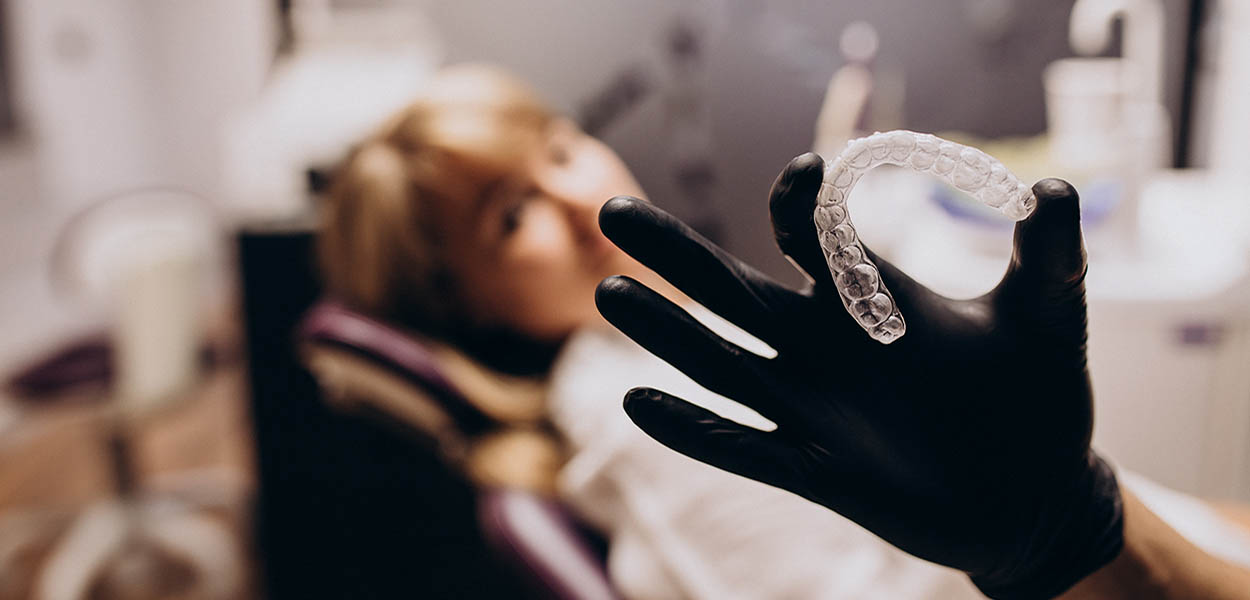
Invisalign uses custom-made aligners made of comfortable and practically invisible plastic. Aligners can be taken out to eat and maintain normal oral hygiene.
Patients get a new set of aligners approximately every two weeks, and they must wear the aligners for 20 to 22 hours a day during the treatment process to see the desired result quickest.
If you’re considering Invisalign, you need to keep in mind that Invisalign aligners can stain or become discolored with wear. Sometimes removing the trays is uncomfortable, and Dr. Stosich says movements aren’t as precise with Invisalign.
“Invisalign often is marketed as being a fast treatment option, but this form of treatment takes twice as long as clear aesthetic braces,” he says.
Food for Thought
If you are looking to straighten your teeth but you’re concerned about the way you’ll look with metal braces, keep in mind that these discreet options exist.
Dr. Stosich has treated numerous patients with these two technologically advanced procedures, and he is the only university-trained doctor in the country to receive advanced training from the inventor of SureSmile. He also offers a complimentary consultation to discuss your specific needs and how SureSmile or other treatment options can best address your particular bite or alignment issues.
Tags: Braces, Invisalign, Lake Bluff, orthodontist Mundelein, SureSmile
Dr. Stosich Joins Group That Improves Smiles for Underserved Children
GRAYSLAKE AND GURNEE, ILLINOIS— We here at iDentity Orthodontics are excited to announce that Dr. Michael Stosich recently joined the Smiles Change Lives family of orthodontic providers.
Smiles Change Lives is a national organization headquartered in Kansas City that makes essential orthodontic treatment accessible to children who come from low-income families and may not otherwise be able to receive it.
“Being part of this organization gives me an opportunity to pay it forward,” orthodontist gurnee ,Dr. Stosich says. “There are children in Grayslake, Hyde Park, Gurnee and other surrounding communities who can benefit from this program. I look forward to helping make that possible.”
Dr. Stosich’s participation in the program means he will refer potential low-income candidates that our practice encounters to SCL. Each candidate will go through a comprehensive application and screening process prior to being approved for treatment.
Needy patients are referred to our Grayslake and Gurnee orthodontics practice occasionally, so it’s nice to be connected with an organization with a track record of ensuring those who truly need orthodontic treatment are properly vetted and connected with an orthodontist who participates in the Smiles Change Lives program, says Dr. Stosich.
We sometimes see patients whose parents couldn’t afford treatment for them as children, so they come to us for treatment as an adult. Braces can be used at any age to correct numerous bite issues and align teeth, but there are some malocclusions that are best treated during childhood, says Dr. Stosich lake county iDentity Orthodontics expert, who also is an Invisalign Teen Hyde Park expert.
“We don’t want cost to be a barrier to children whose orthodontic treatment would be most successful if provided while they are still growing,” he says.
Smiles Change Lives began as The Virginia Brown Community Orthodontic Partnership in 1997. An initial grant helped provide orthodontic treatment to 48 children from the Kansas City area. Since then, more than 1,500 children have experienced the self-esteem and confidence boosting power that orthodontic treatment offers by making over their smiles.
Visit www.smileschangelives.org for more information about this program.
© 2012 Master Google and iDentity Orthodontics. Authorization to post is granted, with the stipulation that iDentity Orthodontics and Master Google are credited as sole source. Linking to other sites from this document is strictly prohibited, with the exception of herein imbedded links.
Tags: adult braces, orthodontic treatment
Dr. Stosich Joins U. of Chicago Craniofacial Team
CHICAGO AND GRAYSLAKE, ILLINOIS- In September, the University of Chicago Medical Center announced it appointed Dr. Michael Stosich, a Grayslake orthodontics specialist, as the lead orthodontist on its craniofacial services team.
He begins working with the team in the coming months.
This appointment means Dr. Stosich will work with a variety of plastic and reconstructive surgery experts in the Craniofacial Anomalies Multidisciplinary Program at the University of Chicago. This team offers a comprehensive team approach to evaluating, diagnosing and treating children who have craniosynostosis and other craniofacial disorders. Examples include cleft lip, cleft palate, and Treacher-Collins and Crouzon syndromes.
The University of Chicago is a leading institution for this type of treatment, and the CAMP team is nationally ranked and recognized. The appointment is in addition to Dr. Stosich’s private practice.
This kind of work is near and dear to Chicago SureSmile expert Dr. Stosich, who completed a craniofacial fellowship at Children’s Hospital of Philadelphia at the University of Pennsylvania, the leading children’s hospital in North America.
There was a recruitment process to locate the right person, and thanks to his craniofacial background in Philadelphia, the decision-makers felt like they found the right fit with Dr. Stosich.
“It’s certainly an honor to be at the University of Chicago Medicine, so I’m thrilled,” says Dr. Stosich, who offers a variety of treatment options in his Grayslake office, including Invisalign, and adult braces alternative. “It’s very exciting to be working with such a renowned group of specialists and to give back to the community where I grew up.”
Many of the cases Dr. Stosich will be involved in require following patients from birth to adulthood.
“They almost become part of your extended family,” he says.
The family members these patients bring in with them are affected, too, because they see the changes in the child’s personality and self-esteem as the treatments progress. That makes Dr. Stosich’s CAMP involvement meaningful and rewarding in a variety of ways.
“The pay isn’t why you do it,” he says. “When you see the difference you can make in terms of life quality for these kids, that’s really the reward.”
© 2012 Master Google and iDentity Orthodontics. Authorization to post is granted, with the stipulation that iDentity Orthodontics and Master Google are credited as sole source. Linking to other sites from this document is strictly prohibited, with the exception of herein imbedded links.
Tags: braces grayslake, Dr. Stosich, Invisalign Grayslake
Think Invisalign is the Best for Correcting Crooked Teeth? Think Again
GRAYSLAKE, ILLINOIS – The marketing machine behind Invisalign has a growing number of patients asking for this treatment by name when they visit iDentity Orthodontics. Reviews of this treatment run the gamut, however.
Some dentists and orthodontists swear by it, while others believe there are more effective treatment methods. Still others- like Dr. Michael Stosich- see Invisalign as a good option in limited cases.
While in his orthodontic residency at Temple University, the leading digital orthodontic institution in the world, Dr. Stosich received specialized Invisalign training. This training resulted in him acquiring master level knowledge of the treatment modality.
Invisalign can be a good option for correcting crooked teeth and other mild alignment issues, says Dr. Stosich, a Grayslake and Gurnee orthodontics expert. Invisalign uses a series of clear plastic aligners that gradually guide teeth into their proper placement. The aligners have long been touted as an “invisible” way of straightening your teeth because they are clear initially. But once worn by the patient, they stain considerably as do the required Invisalign attachment, resulting in a less than cosmetic appearance, Dr. Stosich says. This is in contrast to clear braces that do not stain and are tooth colored.
They are removable, so the patient needs to take them out every time they eat or drink. And to work properly, Invisalign needs to be worn at least 22 of 24 hours every day. Since they are void of wires and brackets common to orthodontic treatment, oral hygiene is easier for some patients. However, the trays need to be thoroughly cleansed daily by the patient, as they can become a source of decay.
“When patients come in for an evaluation, I create a treatment plan that considers the patient’s desires as well as the final outcome,” Dr. Stosich says.
When he sees a patient who wants Invisalign, he tells them he can offer it, but he shares the entire treatment picture. He also informs them that Invisalign treatment takes two to three times as long as SureSmile with clear braces.
“Needless to say, patients usually go with the braces for the cosmetic benefits and shorter treatment time” he says.
For those who will not be swayed, he reminds patients that it is important to choose a specialist who is best equipped to provide optimum treatment. A growing number of dentists offer Invisalign, so what difference does it make if you are treated by your dentist or your orthodontist?
The American Association of Orthodontists addresses this question on its website with these points:
- An orthodontist must graduate dental school at the top of his/her class to be accepted into an orthodontic residency.
- While completing a two- to three-year orthodontic residency, orthodontists receive extensive training in how to best enable teeth, jaws and facial muscles to work together for optimum speech, bite and chew function.
- Your bite is complex, and a healthy bite is an orthodontist’s goal. An orthodontist possesses intricate knowledge of the role that teeth, jaws, soft tissue and facial muscles play in creating a proper bite.
- Orthodontists have a comprehensive understanding of the wide array of treatment options available today, and they can create a treatment plan that considers all of your specific needs.
If you’re interested in learning whether you can be treated with Invisalign, SureSmile or other affordable braces, Grayslake and Chicago orthodontist Dr. Stosich offers free evaluations. Call us today for an appointment.
Tags: crooked teeth, iDentity Orthodontics, Michael Stosich
Four Orthodontic Problems Best Corrected Early
GRAYSLAKE, ILLINOIS – As a parent, you want what’s best for your child. That includes a healthy and beautiful smile.
Dr. Michael Stosich says there are four orthodontic problems that are most easily corrected at a young age, making it easier (and sometimes cheaper) for you to give your child that confident, healthy smile:
• Protruding teeth
• Crossbites
• Poorly developed jaws
• Severe crowding
Early orthodontic care can reduce or even eliminate the need for surgery in the future in some cases, such as underbite correction.
When children are young, their growth spurt can be used to make orthodontic treatment more manageable. Jaw and teeth growth can be guided with orthodontic devices such as headgear, palatal expanders and braces designed for children and teens.
“By bringing your child in for evaluation at an early age, we are able to assess and treat problems with minimally invasive orthodontics designed specifically for your growing child,” says Dr. Stosich, an orthodontist in Gurnee.
Your child’s facial features and teeth are like clay in an orthodontist’s hands. While they are growing, their features can be reshaped into better form. As they age and their bones mature, it becomes harder to fix problems without extreme measures.
Protruding Teeth
The first step toward correcting this early is identifying poor oral habits that may cause teeth to protrude, such as:
• Sucking the thumb or fingers
• Nail biting
• Chewing on pencils
• Chronically pushing the tongue against the back of the teeth
The American Association of Orthodontists advises parents to take their child for an orthodontic evaluation by age 7 or at the first sign of a problem. For example, Dr. Stosich can install a device that takes away the pleasant sensation of thumb sucking if this habit proves difficult to break.
After stopping the habit that’s causing the teeth to protrude, Dr. Stosich may fit your child with a retainer or headgear to correct the issue as the teeth grow.
Crossbite
A crossbite almost never corrects itself, so orthodontic treatment is a given, says the Hyde Park orthodontics expert. Treatment sometimes involves using a palatal expander.
“This is one malocclusion where we truly use a child’s growth to our benefit,” Dr. Stosich says.
There is a suture- or natural division- in the bones of the palate. These bones, when separated in a child, will grow together again in the desired position with the use of an expander.
Poorly Developed Lower Jaw
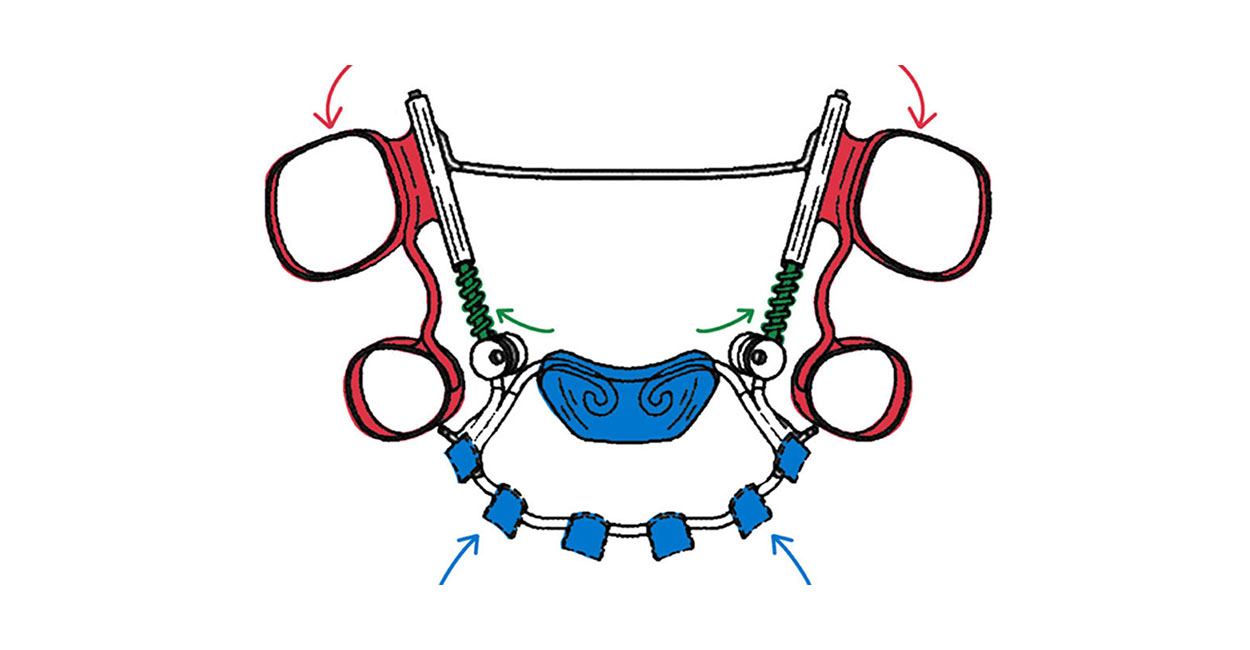
A variety of appliances is used to correct a lower jaw that must be set back or brought forward. Those include the palatal expander, face bow, head cap and reverse-pull headgear.
Sometimes expanding the upper palate makes it possible for the upper teeth to rest in front of the lower teeth, while other times, it’s necessary to direct the lower jaw’s growth.
“Determining the course of action is done after a comprehensive evaluation,” says Dr. Stosich an orthodontist who offers affordable braces in Gurnee and Grayslake.
Particularly in cases of underbite, early treatment is beneficial because it prevents the need for invasive surgery in the future.
Severe Crowding
Sometimes it’s as simple as removing some baby teeth to make room for the adult teeth. Other times, we may use plastic or metal space maintainers to prevent surrounding teeth from moving into open spaces created when teeth are pulled or lost due to trauma.
Orthodontic appliances can be used align the crowded teeth and can develop more space in your child’s mouth to make room for the rest of the permanent teeth to erupt in better position.
“If it appears your child has any of these problems, I recommend making an appointment for an evaluation,” says Dr. Stosich, who also is an Invisalign Teen provider.
© 2012 iDentity Orthodontics and Master Google. Authorization to post is granted, with the stipulation that iDentity Orthodontics and Master Google are credited as sole source. Linking to other sites from this document is strictly prohibited, with the exception of herein imbedded links.
Tags: braces in Gurnee, Hyde Park orthodontics, orthodontist in Gurnee